

.svg)
Title: The $6M Resort Plan Behind 11 Acres of Bare Land
PEEK THE PLAYBOOK
The $6M Resort
Plan Behind
11 Acres Of Bare Land
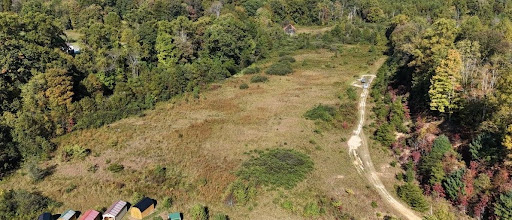
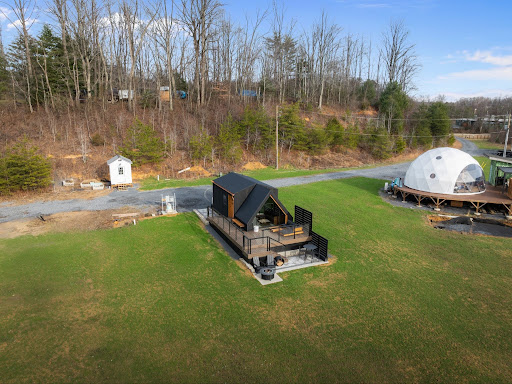
Host Camper Doug Hanks is building Star Farm, an 11-acre raw land project in Fayetteville, West Virginia, about 4 minutes from the main entrance to New River Gorge National Park.
The target is a projected $5M–$6M hospitality asset by 2030. The first proof point is much smaller: One 400 sq. ft. A-frame modeled at roughly $5K per month in net income.
Here's the deal:
• 11 acres of raw land
• ~$250K land purchase
• 4 minutes from a national park entrance
• ~$1,500 first major permit
• Under ~$3K–$4K total permit-related spend
• ~$15K drainage hit before the land worked properly
• 400 sq. ft. first A-frame
• ~$5K/month target net income
• ~$60K/year NOI (net operating income)
• 8% cap rate = ~$750K implied valuation
• 8-door plan = projected $5M–$6M hospitality asset by 2030
SPONSORED BY BASELANE
Automate Your Rental Bookkeeping for a Chance to Win $10K.

Your short-term rental finances shouldn’t require daily supervision. They should be running seamlessly in the background. Which is exactly why you need Baselane.
Baselane is the banking and bookkeeping platform built for real estate investors. You get notified the moment money hits your account. Transactions get tagged to the right property and category. Meaning, your bookkeeping updates in real time.
With Baselane you also get:
✓ Listing-specific bank accounts with no monthly fees✓ Real-time cash flow reports across your entire portfolio✓ Property debit cards for co-hosts with spending limits you control
One deposit. Everything else handles itself.
And right now, you can set up your Baselane account for a chance to win $10K.
How to enter: Deposit your Airbnb or VRBO payouts into a Baselane account (minimum $500) and you’re automatically entered. No purchase necessary, free entry method available.
AUTOMATE YOUR BOOKKEEPING NOW AND ENTER TO WIN $10K →—SITE SELECTIONThe Land Filter
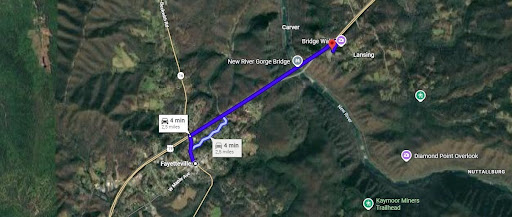
Doug's filter was simple: Real demand nearby, commercial use rights, and room to add more income-producing units.
The parcel sits 4 minutes from the main entrance to New River Gorge National Park, which went from 1 million to 2 million annual visitors after receiving national park designation in 2021. West Virginia also made a deliberate shift from a coal and mining economy to tourism, which created the demand Doug was betting on.
The other thing most buyers would have walked past: The land carried mixed-use commercial zoning. A single cabin on residential land gets valued one way. A commercial parcel with multiple income-producing units becomes a hospitality asset. That one distinction makes a huge difference once you start running the numbers on a potential valuation.
—ZONINGThe Permit Edge
Doug's first major permit was around $1,500 and approved the same day. His total permit-related spend landed under $3-$4K.
The permit advantage came from one local definition.
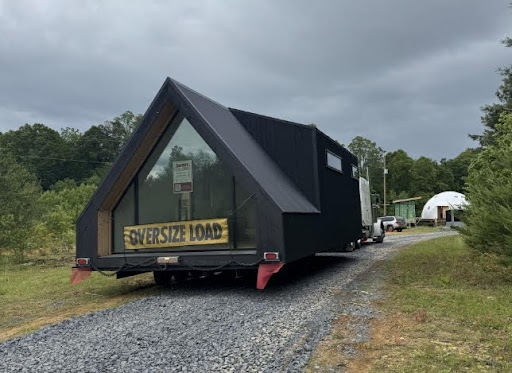
Doug's Zook A-frame was classified as a park model RV in that zoning district. Because the county treated it as a mobile structure, it did not require the same permit path as a fixed-foundation building.
He didn't know that going in, but found out about it by talking to the zoning department.
That county definition changed the timeline, the cost, and the first-door strategy.
THE LESSON
Before the land closes, find out what the county calls the structure and where it fits in the zoning code. Cabin, RV, park model, campground, glamping unit, and accessory structure can each trigger different rules. Check the zoning district, use table, and standards, then call the county with the parcel ID and 2–3 specific questions before you underwrite the deal.
—THE BUILDThe First-Door Strategy
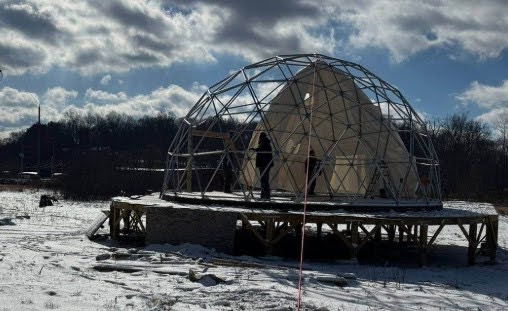
Raw land has costs before it has revenue.
Power, water, septic, drainage, grading, access. On Doug's flat parcel in a mountainous region, water moved toward the site instead of away from it. The drainage fix alone cost $15,000 before a single guest could set foot on the property.
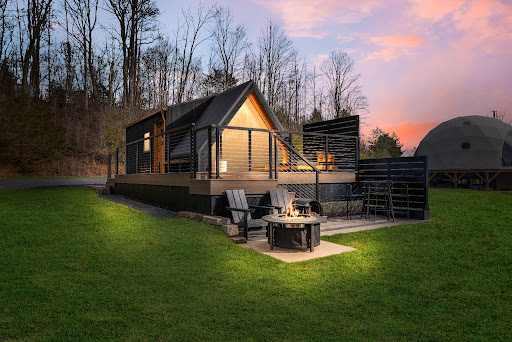
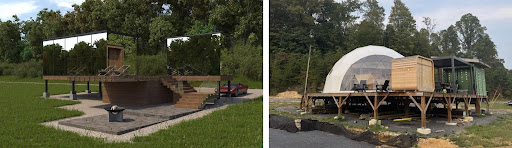
The original plan was to launch with a dome, but the build took longer than expected. Doug changed the sequence and brought in a prefab A-frame instead.
The goal was not to finish the whole resort first. It was to get one premium unit live, collect real booking data, and prove guests would pay for that kind of stay in that market.
Even with a prefab structure, the A-frame still took about 6 months to get online.
Once it launched, the first door gave Doug the information raw land underwriting cannot give you on paper: When guests book, what they compare, what they are willing to pay, and where the pricing rules are hurting demand.
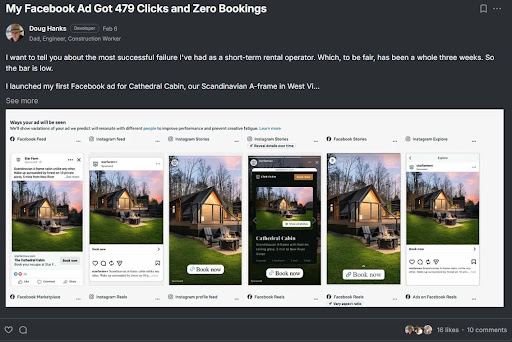
Doug is one of the most active operators inside Host Camp Scout Community.
He's been sharing the Star Farm build in real time: failed Facebook ads, pricing tests, direct booking data, launch problems, construction updates, and the numbers behind each decision.
If you want to surround yourself with hosts and investors building like this, Host Camp Scout has 4,000+ of them inside.
—PRICINGWhy Pricing Has To Support Booking Behavior
Guests were booking only 9 days before check-in.
Doug checked PriceLabs and found the problem. His pricing was giving guests a reason to wait.
Dates further out were priced 3–4x above baseline, while last-minute discounts were too steep. So the guest who planned ahead saw the worst price. The guest who waited until the week before got the deal.
That created two problems. Early planners had an easy reason to book a cheaper cabin nearby, and late planners had no reason to reserve early.
Doug made 3 fixes in PriceLabs:
→Removed the steep last-minute discounts→Added discounts for bookings made further out→Narrowed the rate window so pricing stayed closer to the local market
Within 2–3 days, the listing picked up more than 30 booked days.
Guests also started booking earlier. The typical booking window moved from 9 days before check-in to 19 days before check-in.
—THE NUMBERSThe Valuation Math
Most STR investors value their property like a house: Nearby comps, square footage, and recent sales.
Doug is building toward a different valuation model.
Because Star Farm is commercially zoned and built around multiple income-producing units, the property can be valued more like a hospitality business. The number that matters is NOI, or net operating income: The profit left after expenses before debt.
Here's the simple version:
→First A-frame: About 400 sq. ft.→Target net income: ~$5,000/month→Annual NOI: ~$60,000/year→Example cap rate: 8%→Implied value: $60,000 ÷ 0.08 = ~$750,000
That is the valuation case off one door.
The bigger plan is to repeat the model across 8 doors. As each unit adds income, the property's NOI grows. If the NOI grows, the commercial valuation can grow with it.
That is how Star Farm gets to a projected $5M-$6M valuation by 2030.
The other detail worth noting: Doug built this without debt, a HELOC, or outside investors. Cash only. Working in his free time over nights and weekends.
—THE FRAMEWORKThe Raw Land Audit
Before an offer gets serious, check for these five things:
Demand: What sends overnight guests into this market? National park, lake, ski mountain, trail system, wedding corridor, event venue, or tourist town.Use rights: What does the zoning actually allow? Check the district, use table, structure definitions, density limits, and permit path.Site costs: What has to be built before revenue starts? Power, water, septic, drainage, grading, access, internet, and local labor.First door: What is the fastest structure that can prove demand? The first unit needs to create reviews, test operations, and generate income.Valuation: Is this a cabin deal or a hospitality asset? A single STR is valued one way. Multiple units with stabilized NOI are valued very differently.STAR FARM'S SEQUENCE
Buy land with real demand nearby, confirm the use rights, get one door online, fix the pricing, use the income data to support the next phase.
Want The Raw-Land Framework Behind This Deal?
Doug already had the ambition to build something unconventional. What he needed was the framework to evaluate the land, understand the zoning, choose the first structure, and avoid guessing his way through the deal.
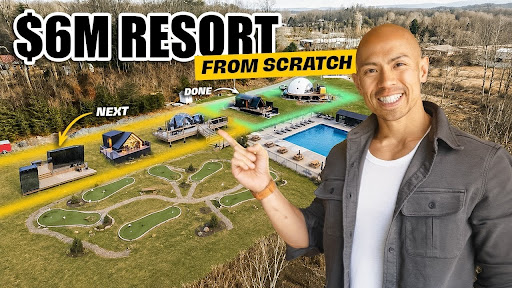
Doug took the framework, applied it to Fayetteville, and turned 11 acres of bare land into a phased resort plan. To see the exact playbook Doug used to bring this deal to life, be sure to catch his recent feature on YouTube.
CHECK OUT THE FULL CASE STUDY VIDEO →
