

.svg)
Read This Before You Buy Cheap Land
Read This Before
You Buy
Cheap Land.
That $5,000 acre might cost you $300,000 to develop. Here's what we've learned the hard way so you don't have to.
There's something intoxicating about cheap land. You see 10 acres for $30,000 and your brain immediately starts rendering tiny homes, A-frames, glamping domes, the whole dream. We get it. We've been there too.
We've also been the people who almost dropped $2 million on a sewer hookup for a campground we hadn't even broken ground on yet. Cheap land has a way of becoming very expensive land, fast.
Host Camp founders Rob Abasolo and Kai Andrew sat down to discuss the biggest mistakes they see people make when buying land to build on. Here are the top 7 things you need to know before making an offer.
01
TIP ONE
Follow the Power Lines
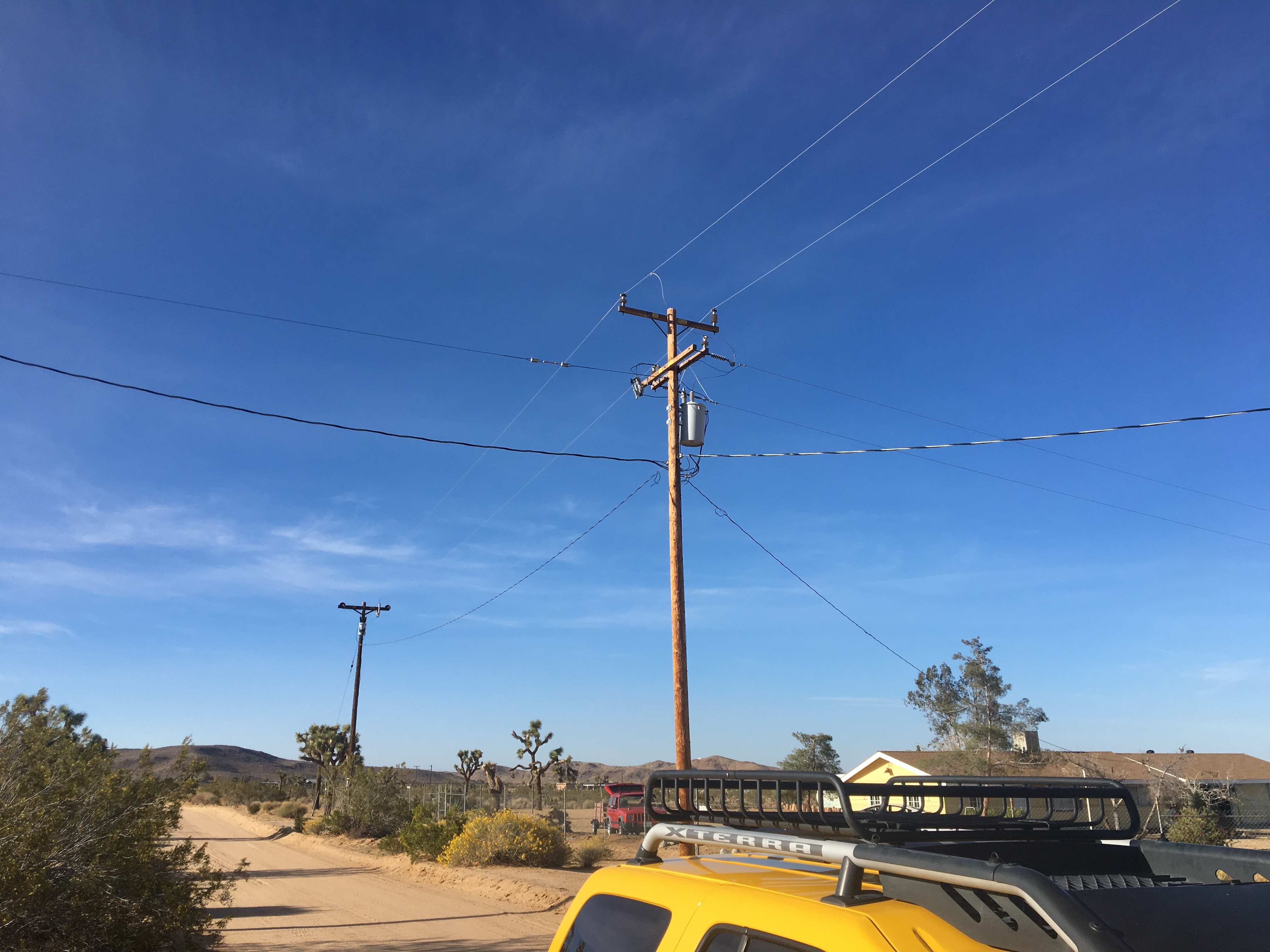
Utility access should be a deal breaker for beginners, full stop. A good rule of thumb: for every foot between your build site and the nearest power source, budget $3 to $20. That gap adds up fast.
Above ground poles typically run $7,000 to $10,000 each. If you need seven poles to reach your property, that's $70,000 before you've done anything else. Go underground (which you'll want to for any higher-end build), and that number roughly doubles. Add trees that need to be cleared for power line clearance and you're suddenly staring at $50,000 to $200,000 just to get power to your build site.
The green flag: a power pole or transformer at street level, close to where you want to build. That's the starting point. If the nearest power source is a mile away, walk away.
02
TIP TWO
Call the County, Not the Seller
Sellers and agents will tell you what you want to hear. Not always intentionally, but it happens constantly. "Oh yeah you can Airbnb here. Yeah you can add an ADU. Yeah the zoning is fine." And then you close, you call the county, and you find out none of that is true.
Every piece of information you need, zoning, permits, deed restrictions, setbacks, use requirements, is at the county records office or the land use and development department. Call them directly. Better yet, go in person. In Across three dozen counties, showing up as a real human being gets you further than any phone call.
03
TIP THREE
Drive the Last Mile Yourself
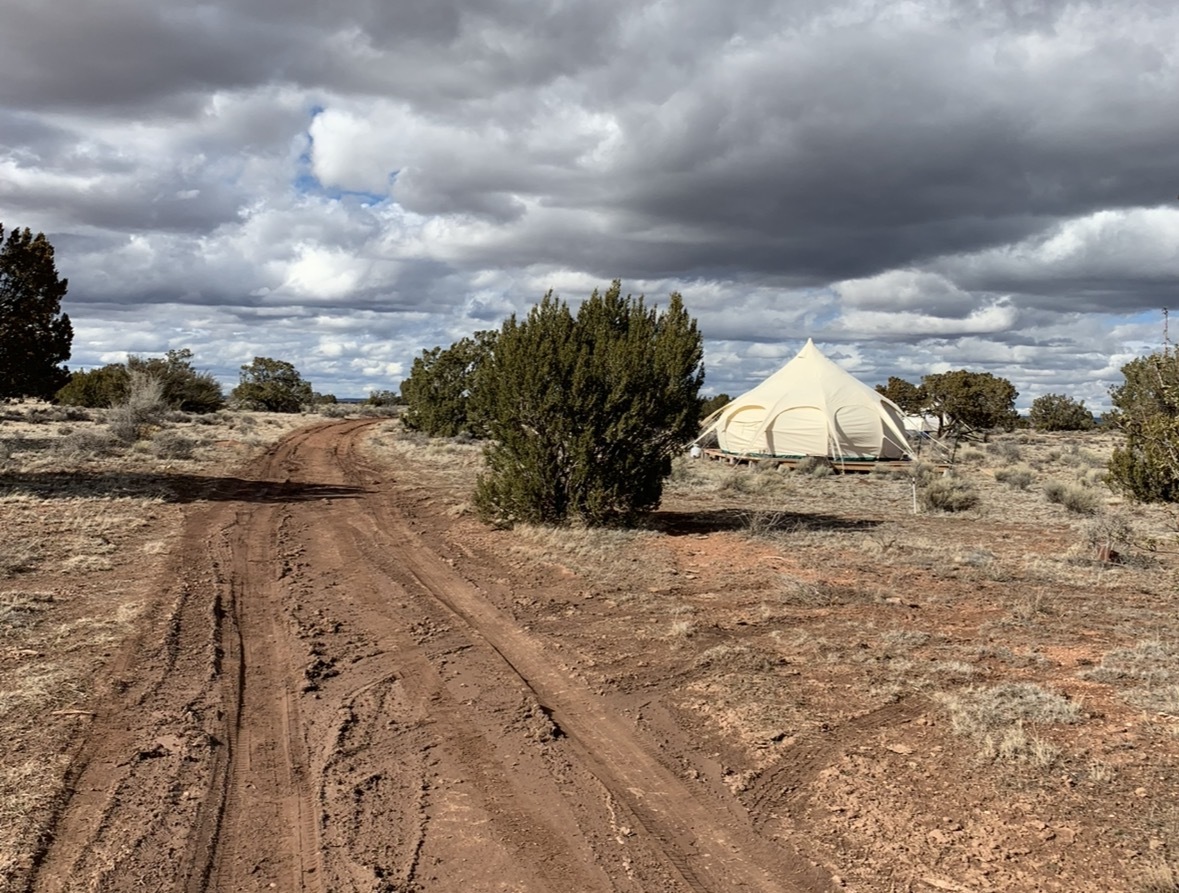
You can fall in love with a property through photos. Do not buy it without physically driving onto it. Not just to the road in front of it. Onto it.
A lot of rural and undeveloped land has mud roads, washed-out gravel, and terrain that heavy construction vehicles simply cannot navigate. Cement trucks, lumber trucks, drill rigs, these are 5 to 15-plus ton vehicles. If they can't get to your build site, your project doesn't move. Getting a proper road in can run $20,000 to $100,000 (and in some cases even more) depending on distance, slope, and terrain.
And if you're building for short-term rental guests, think about the experience. We had a property where rain and snow turned the access road into a mud trap. Guests were getting stuck constantly with no cell service. We had someone on site who could tow them out, but that's not a guest experience anyone is proud of. That's a one-star review waiting to happen.
BONUS
Verify Legal Access to the Property
A surprising number of properties are landlocked, meaning there's no legal road access to get there. This is often why a 100-acre parcel is going for $50,000. If you're on an easement, understand exactly what that easement allows, who has access to it, and what you can and can't do with it.
BONUS
Commercial Builds Trigger Traffic Studies
If you're planning a campground, RV park, or any multi-unit operation, counties will want a traffic study that determines whether existing roads can handle the volume you're bringing in. We've come across deals where road development alone ran $300,000 to $350,000 before we ever touched the land itself. Road development is expensive and easy to overlook. Do your due diligence before rushing into an offer.
Want to Build
the Right Way?
Book a call with our team. Our experts can help you navigate the zoning, permitting process, and the red flags you need to watch out for when buying land for a ground-up development. We'll walk through your land, your market, and your build plan to make sure it actually makes sense before you commit.
BOOK A CALL →
04
TIP FOUR
Neighbors, NIMBYs, and Noise
NIMBY stands for "not in my backyard." And if you're building a glamping concept, a tiny home village, or anything that brings rotating guests to a quiet area, there is a real chance your neighbors will fight it, even if everything you're doing is fully legal.
Counties are reactive, not proactive. They only act when they get complaints. One determined neighbor can trigger an investigation, and if anything about your operation is even slightly out of compliance, you can get shut down. Our framework: before you buy, check whether local ordinances favor what you want to do, or favor your neighbors if they complain.
We've seen plenty of deals where everything is looking great, until the city hall meeting happens and half the town shows up to vote against you. It happens more than you'd think. Go meet your neighbors before you buy. Gauge the sentiment. Not everyone wants a glamp site next door, and finding that out after closing is a very expensive surprise.
05
TIP FIVE
Check the County Development Pipeline
This is a total pro move that most buyers skip entirely. Every county has a development plan, an internal road map of what's being built, expanded, or zoned in the next 5 to 10 years. New schools, transit lines, highway expansions, commercial zones. This is all public information, usually at the land use or zoning department, and it can tell you a lot about whether a piece of land is going to be worth more or a lot less in a decade.
If you find out a cemetery or industrial plant is going next door, that's a deal-killer for a hospitality build. If a new road and commercial corridor are coming in, that's a tailwind. Either way, you want to know before you buy.
06
TIP SIX
Wells (Primarily for Rural Buyers)
If you're not connecting to city water, you've got three options: drill a well, install a cistern (a tank that gets filled by a water truck), or connect to city water if the county requires it. In many rural areas the well is the play, but it's not without real risk.
Drilling runs approximately $40 to $100 per foot. At 600 feet deep, that's $60,000. And if you hit a dry pocket, you still owe that $60,000, and you have to start over. A good driller will pull permits from surrounding properties to estimate where the water table is, but it's never a guarantee.
The access issue applies here too. Drill rigs are massive. They need a flat, accessible area to work. If the only place you can drill is far from your build site, now you need a separate road and a system to pump water across the property. All of this is market specific. Take Arizona, for example, where clay soil makes wells nearly impossible and alternative septic systems are often required. Land that looks cheap on paper can get expensive fast once you start digging into what it actually takes to build on it.
A NOTE ON FINANCING
If your land relies on a cistern, solar power, or an alternative septic system, 80 to 90 percent of lenders will pass on your construction loan. Before you fall in love with off-grid land, make sure you understand how you're going to finance what you build on it.
07
TIP SEVEN
If It's Steep, Don't Take the Leap
Cheap land on a cliff with ocean views sounds incredible until you find out the foundation alone will run $200,000 to $300,000. Sloped land is expensive land, full stop. Build costs on heavily graded terrain are exponentially higher than on flat ground, and many counties have critical slope zones that restrict what you can build and how large vehicles can access the site.
One of our properties in Severeville is 52 acres. Only about 2 are buildable at ground level because the rest sits in a critical slope zone. The city's requirement was a 22-foot-wide road capable of handling fire trucks and ambulances all the way to the top of the mountain. That road requirement alone was enough to shelve the upper-acreage development plans entirely.
When you're underwriting land, don't look at total acreage. Look at buildable acreage, and understand what it actually costs to build on it.
WATCH THE FULL BREAKDOWN
Want to go deeper? Watch the full conversation on YouTube where we walk through every one of these mistakes in detail, with real numbers and real deals. Watch it here →
