

.svg)
Cost Segregation for Your STR
You Already Overpaid the IRS This Year

You bought a short-term rental, got it guest-ready, and haven't thought about your taxes again since. Your accountant depreciates the whole property in one straight line over 39 years, because that's the default the IRS gives you if nobody tells them otherwise.
That default is costing you money, and it takes about 15 minutes to find out exactly how much. Here's what a cost segregation study does, and why 2026 is the best year in over a decade to run one. This is a straightforward deduction, with no debt or refinancing involved.
What Cost Segregation Does
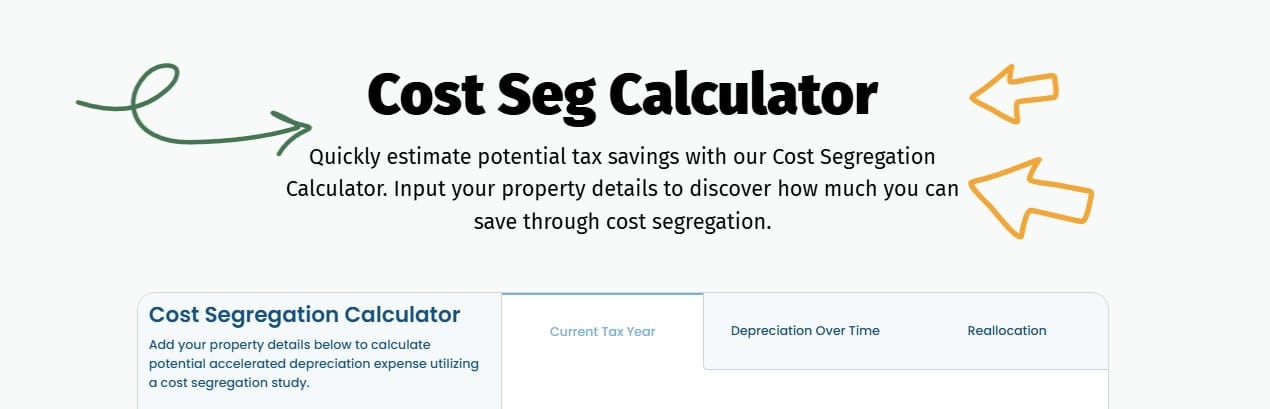
A cost segregation study breaks your property down, piece by piece, rather than treating it as a single 39-year asset. Your appliances, furniture, flooring, landscaping, and amenities like a hot tub or pool wear out much faster than that, so the study reclassifies them into 5, 7, or 15-year categories instead.
Depending on how much short-life stuff is in the property, this usually reclassifies 20% to 30% of your total property value (a stripped-down building has less to reclassify than a fully furnished, amenity-loaded STR).
Why This Year Specifically
Normally you'd take that reclassified chunk of your property bit by bit, spread out over 5 to 15 years. Bonus depreciation lets you take the whole thing at once, in the very first year you own the property.
Say $30,000 of your property qualifies for that faster depreciation:
- Spread out the normal way over 5 years: $6,000 a year in deductions
- With bonus depreciation: the full $30,000 in year one
A tax law passed last year brought this back permanently at 100%, for any property placed into service after January 19, 2025.
On a property in the $500,000 to $650,000 range, that rule of thumb translates to somewhere around $120,000 to $160,000 in first-year deductions. Against a $100,000 W-2 salary, that covers most or all of your taxable income for the year.
What It Takes To Use It

None of this touches your W-2 income unless your rental stops being "passive" in the IRS's eyes. Two things have to be true: Your average guest stay has to be 7 days or less (total nights booked divided by total bookings, not how you list the property), and you have to materially participate, meaning 100 hours or more managing it yourself, more than anyone else involved, including a property manager.
Skip either one and the deduction stays stuck against your rental income only. It never touches your paycheck.
Sell the property later, and you owe recapture on what you depreciated. Used right, this is still a massive advantage, a way to borrow against your own future tax bill instead of paying it now. Get sloppy about tracking hours or planning the sale, and it turns into a surprise bill down the road.
If you own an STR and haven't run this study, you're leaving a 5 or 6-figure deduction sitting on the table for no reason. Talk to a CPA who specializes in short-term rentals before you file anything based on this.
Written by: Rob Abasolo
