

The Playbook: How a 26-Year-Old Turned $10K Into a $7M Tiny Home Resort
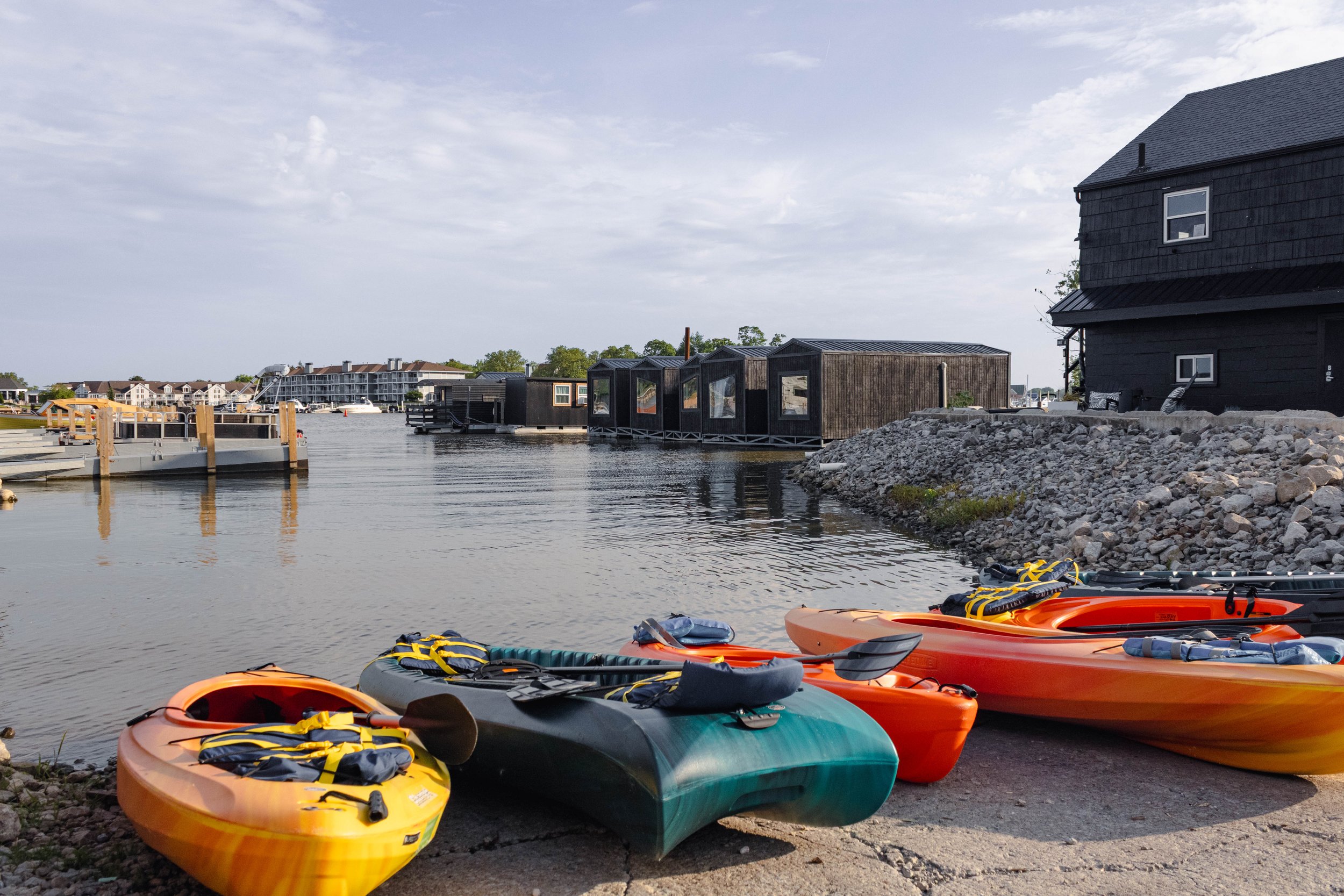
At 29, Joe Lisa owns a floating tiny home village on Lake Erie that's on track to hit $1 million in annual revenue and could be worth $7.25 million.
Three years ago, he was living in a decommissioned ambulance, eating tuna packets out of a cooler, and painting houses to survive.
No hospitality experience. No family money. No grand plan.
Just a series of small leaps that kept compounding until they built something extraordinary.
Here's how he did it.
The Backstory: From Broke to Short-Term Rental Entrepreneur
Joe grew up in Ohio and went to Bowling Green State University. While finishing school, he ran a painting business he'd taken over from a college program called Student Painters. Pretty quickly, he realized something: he was making his bosses a lot of money.
He didn't want a future where he kept making other people rich. He wanted to build wealth for himself.
But he was still broke. And he had to start with what he had, which wasn't much. But he could dramatically lower his own expenses first.
Joe went on a government auction site and bought a decommissioned ambulance from the University of Michigan for $3,500.
"I turned the whole back into like a living room bedroom combo. I had like a cooler that was like my fridge cuz I lived off of like tuna packets and energy drinks."
That ambulance became home. Ladder rack on the roof, job site to job site, every summer of college. He was stacking every dollar to roll into the next thing.
By senior year, he had enough to try his first real estate flip. He expected to make $40,000 to $50,000. He made $10,000.
His reaction wasn't defeat. It was: "Okay, what's next?"
That mindset became the through line for everything Joe built. He doesn't sit around perfecting plans. He tests them quickly and cheaply. If they work, he scales. Fast.
The Proof of Concept: Grand Canyon Glamping
Right after college, Joe took a trip out west and stayed at a few tent sites outside the Grand Canyon.
"I was like, shoot, these people are renting these tents for like 180 bucks. Why are we not doing this? This is so simple."
So he and a friend did exactly that. They bought an acre of land for $5,000 and built the cheapest version of the idea they possibly could: two sheds delivered from Home Depot, three deck tent sites, a communal showerhouse, all solar powered. Everything ordered from Amazon.
To build it, Joe and three guys from his painting crew flew out to Arizona and shared one room at a Motel 6 for three weeks.
Three weeks later, they had a functioning glamp site.
Year one revenue: $98,000.
And we was going to put that money to work.
The Questionable Investment: Buying a Dying Marina
After the glamp site, Joe told his realtor he wanted a marina or campground. Three or four months later, the realtor called about a marina one of his clients wanted to sell. It wasn't even on the market yet.
Joe said yes.
The property was a dilapidated marina on the southern shore of Lake Erie in Sandusky, Ohio. Rusty steel docks from 1978. Industrial metal buildings. An old block building. It was the infamous eyesore of the waterfront.
Eyesore or not, the owner wanted $1 million for it. The revenue? $20,000 a year.
On paper, it looked like a horrible investment.
No traditional bank would touch it. So Joe got creative. He found a group called Enhanced Capital. They were willing to lend the million dollars if he put $300,000 aside for improvements. He pulled together a group of investors who believed in his vision and raised the money.
The Build: Rapid Prototyping on Water
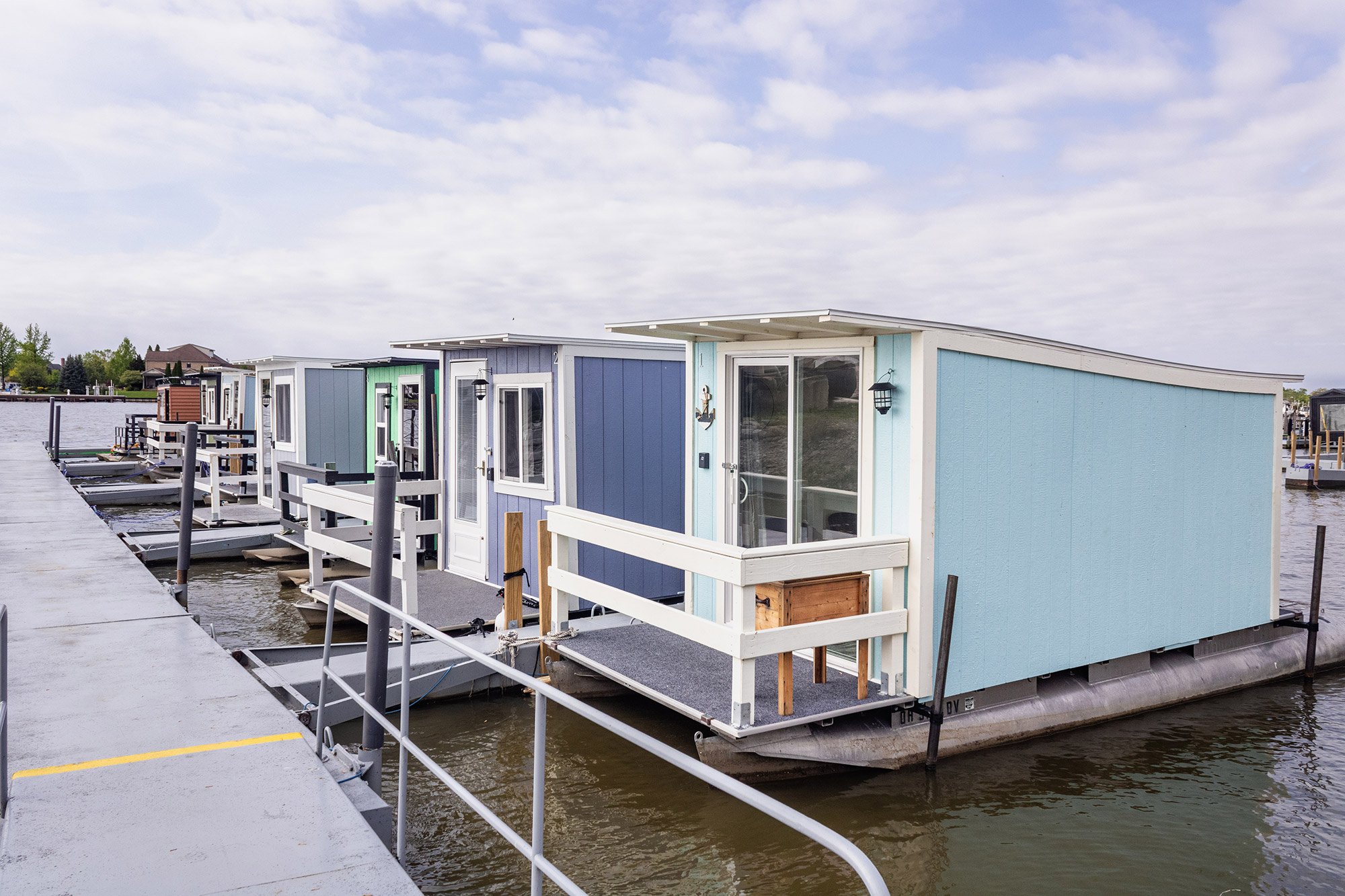
Joe didn't start with luxury units. He started with the cheapest version that would still prove the idea worked.
His crew drove around town, meeting up with people from Facebook Marketplace, buying old decommissioned pontoon boats for $500 to $1,000 a piece. They stripped them down, laid new deck on top, and built 110-square-foot cottages right on top.
Total cost per unit: $10,000.
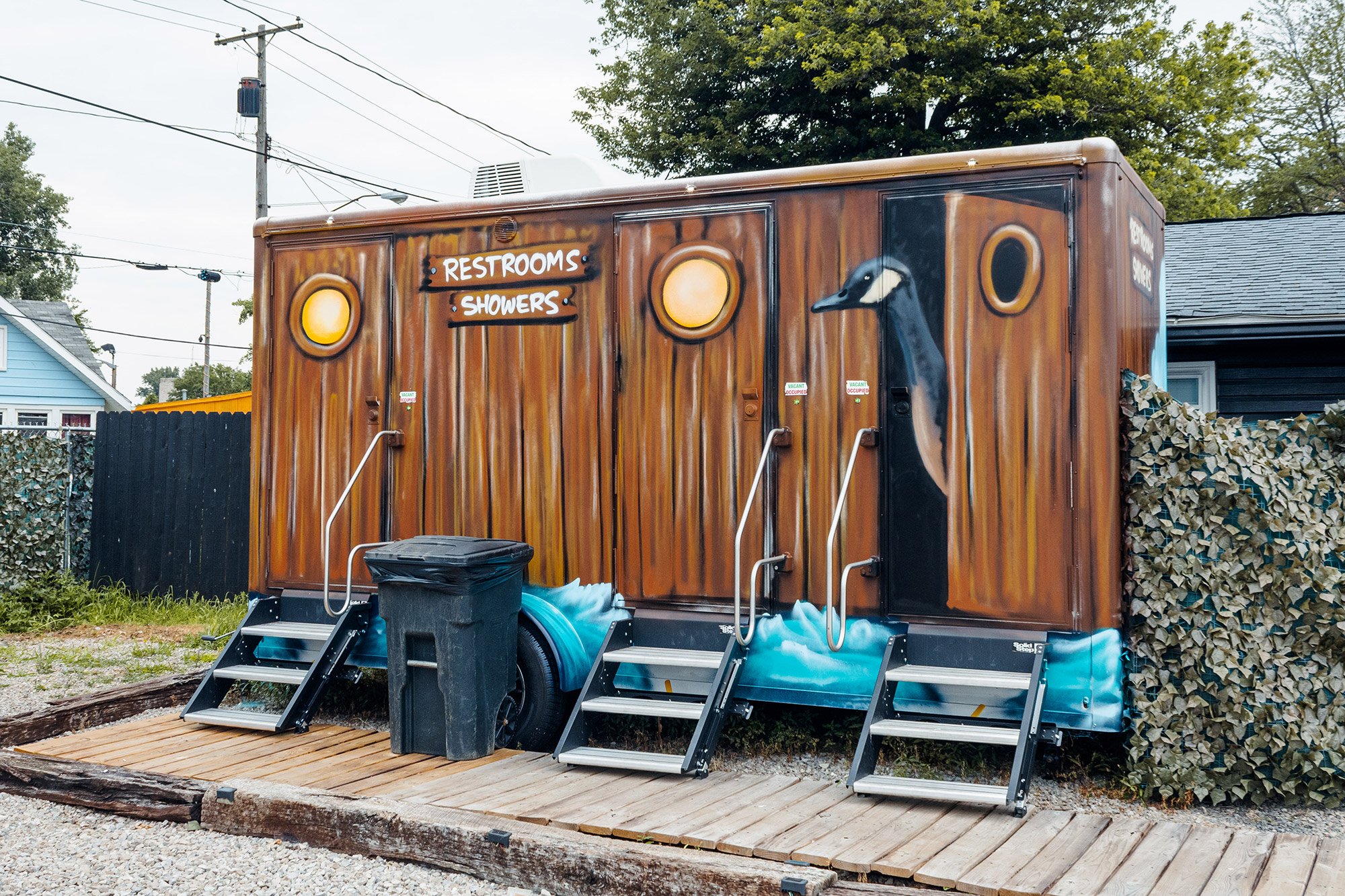
No bathrooms in the units. Just a modular restroom trailer outside. Joe had a graffiti artist transform it into something that looked like a log cabin complete with a goose sticking its head out of the corner.
"We get comments on our bathrooms all the time being like way above what people expected."
Between those 10 houseboats and three existing cottages on the property, SōLSTAY opened its first season with 13 units.
Year one revenue: $370,000.
Joe had his answer. People absolutely wanted to sleep on the water.
Now it was time to do it properly. He added air conditioning, private bathrooms, kitchenettes, and proper insulation. He kept scaling. He kept improving.
Property Spotlight: Welcome to SōLSTAY
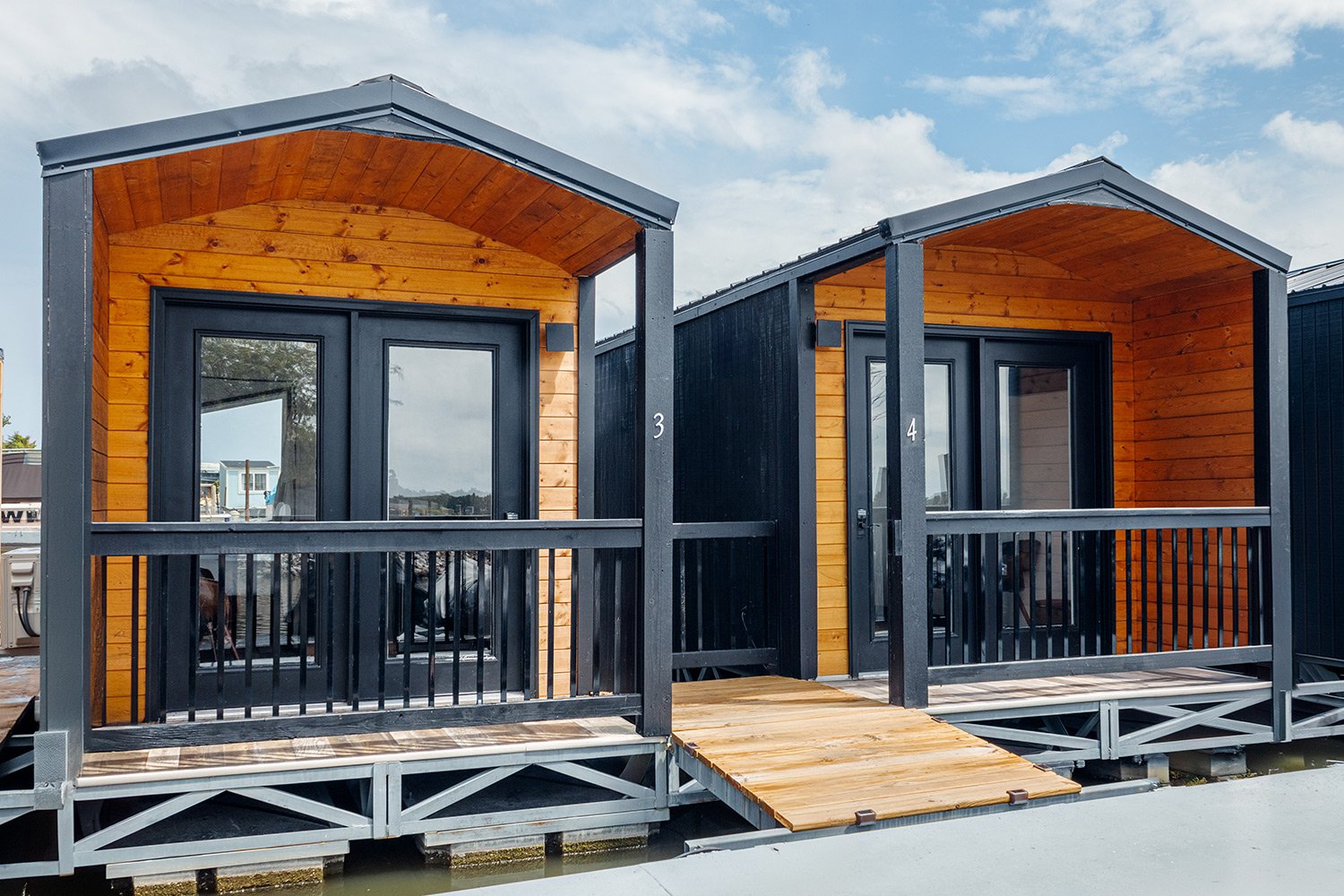
SōLSTAY sits on the southern shore of Lake Erie in Sandusky, Ohio. The area pulls in 13 million visitors a year through the Sandusky region. Hotels have never had to try to stand our or really be exceptional or unique. Joe saw that market gap.
"There's nothing else in the unique stay space in the Sandusky area. There's nothing else floating on water."
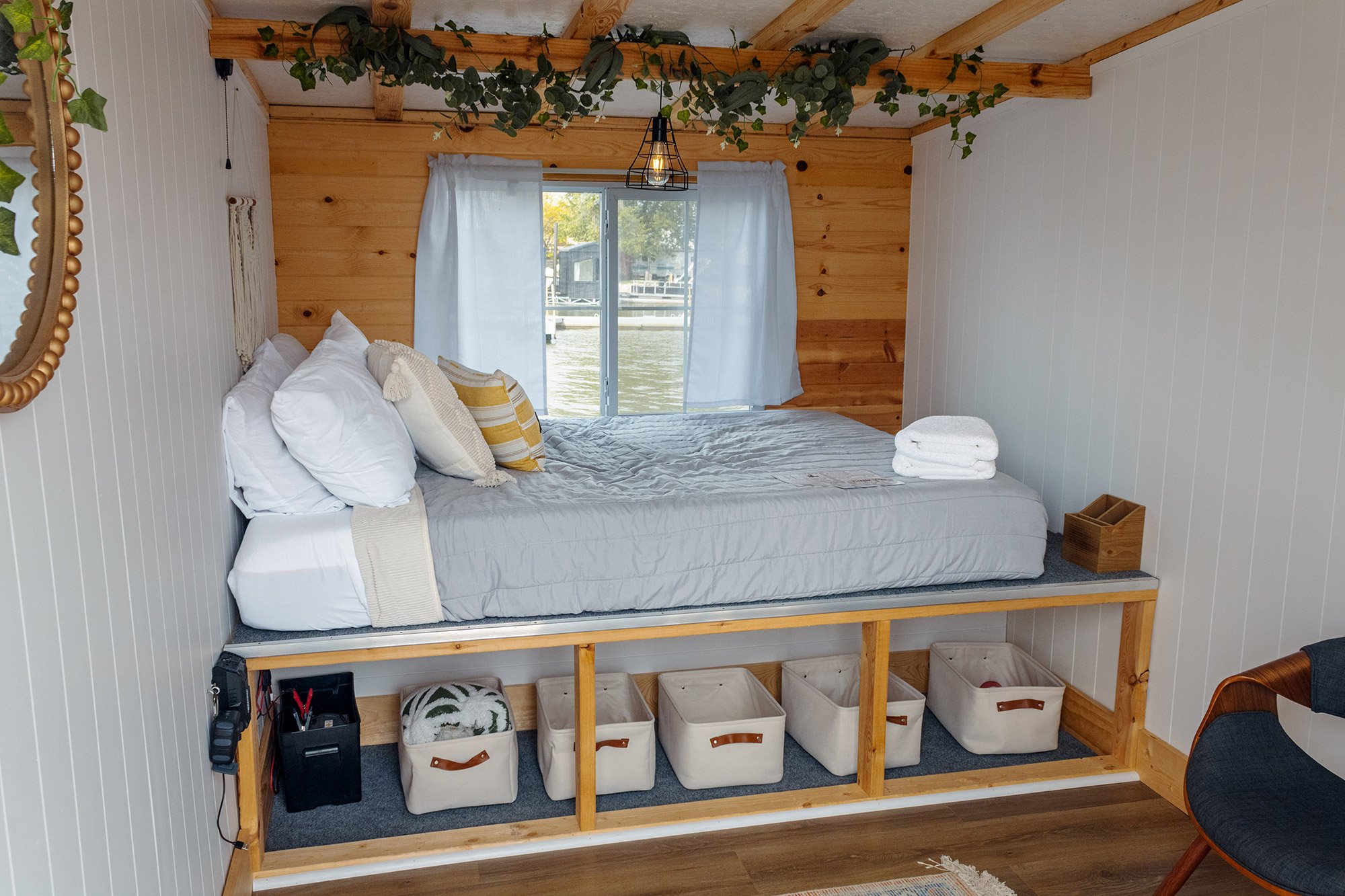
Today, the property has about 30 units heading into the 2026 season. The floating cottages are 25 by 8 feet—small, but every inch intentional. Kitchenette. Living area. And at the head of the bed, a massive picture window staring straight into the lake.
Unit types:
- Original Cottages: The $10,000 pontoon boats. Bare bones but beloved.
- Lux Cottages: Built for $55,000 each. Full bathrooms, kitchenettes, AC, heat, a 4-foot porch, and that signature picture window.
- Converted Buildings: One of the old industrial structures now has a rooftop hot tub with lake views.
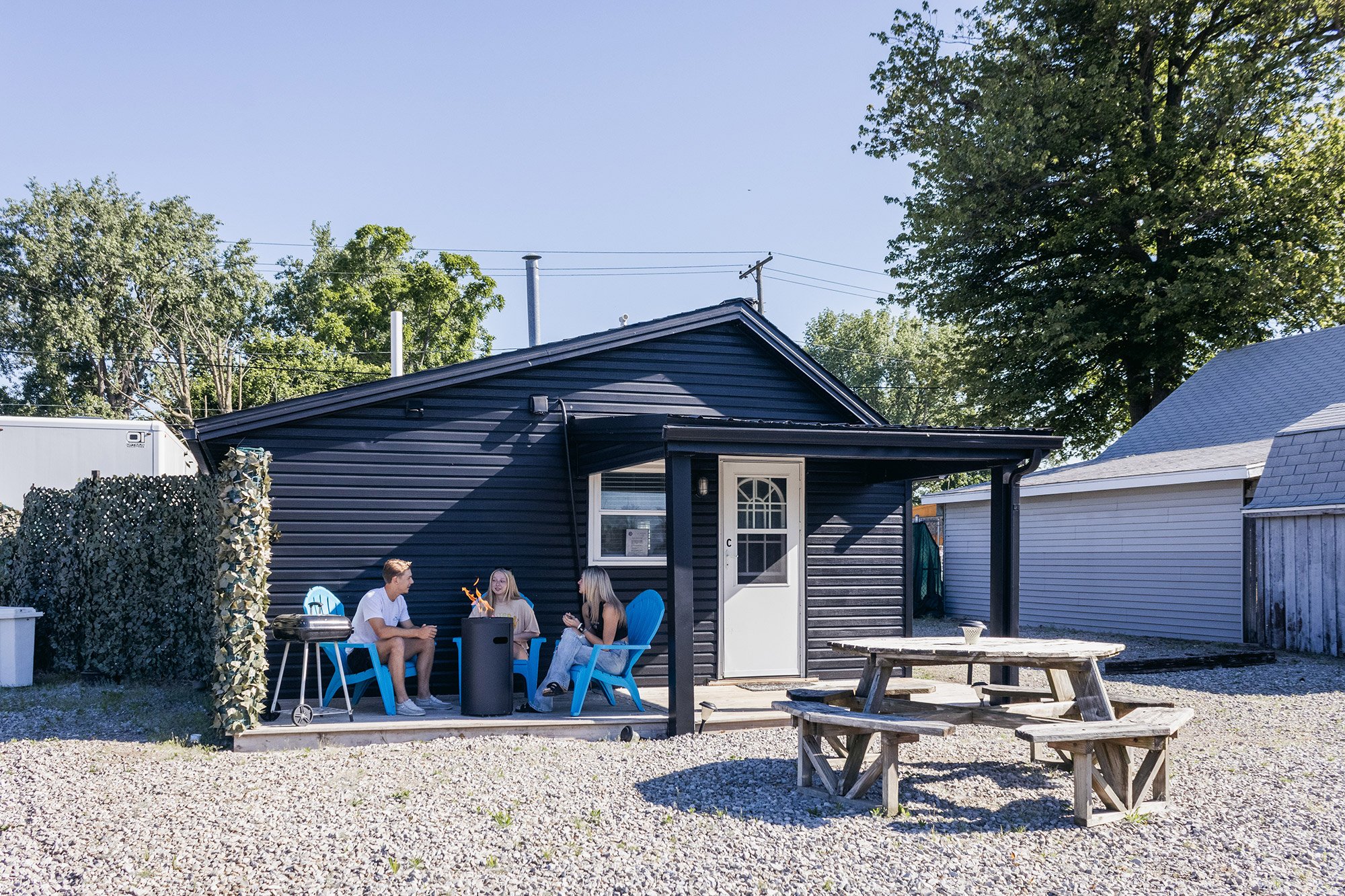
- Neighboring Cottages: Joe has since bought properties across the street, expanding the footprint.
Amenities: An 80-foot boardwalk connecting everything. A convenience store. A boat ramp. Across the water, you can see $1.5 to $2.5 million homes on the shoreline. SōLSTAY went from eyesore to waterfront destination.
.jpg)
Performance & Results
Purchase price (Nov 2022) $1,000,000
Initial improvements $300,000
Year 1 revenue (13 units) $370,000
Year 2 revenue $565,000
2026 projection (30 units): Just over $1,000,000
Net Operating Income (NOI): ~$460,000
Debt service ~$120,000/year
Annual cash flow ~$340,000
Property valuation (8% cap rate): $5.75M on low end
With additional revenue streams: ~$7.25M
Joe bought the property for $1 million. Today, it could be worth over $7 million. And he's just getting started. He recently bought the bar and restaurant next door with 27 dock slips included.
"I've never been in the bar business before, though...talk about impostor syndrome, man. I have no idea what I'm doing."
He said the same thing about the marina. About the glamp site. About every single thing he's ever built. And he figured it out anyway.
The Playbook: What Joe Did Differently (and What Hosts Can Steal)
1. He Found What Was Missing and Built It
Sandusky had hotels, but it had nothing unique. Nothing floating on the water. Joe didn't try to compete with hotels—he made them irrelevant.
2. He Looked for Proven Demand Before Building
13 million people visiting a year told him the market existed. The marina was dead, but the demand was right there across the water. He didn't guess, he just listened to the data.
3. He Started Small and Tested Fast
The $10,000 pontoon boats weren't luxury. They were proof. If guests loved those bare-bones units, he could scale with confidence. If they didn't, he'd lose $10k a unit instead of $55k. He de-risked the entire project before committing real money.
4. He Scaled Fast Instead of Getting Comfortable
Most people would have cashed out after $370,000 year one. Joe reinvested. The Lux units came next. Then more units. Then neighboring cottages. Then the bar next door. He treated it like a business, not a side hustle. That's how you build wealth instead of additional income.
5. He Learned on the Job Instead of Waiting to Be an Expert
Joe had never run a marina. Never built a floating tiny home. Never run a bar. He didn't wait for permission or a mentor. He just started and figured it out as he went.
6. He Got Creative With Financing
Banks said no. So Joe found Enhanced Capital. He brought in investors. He pieced together a solution instead of accepting defeat. Unique builds are hard to finance, but if you can prove your concept, there's always a way. Many of the biggest hurdles are just a challenge to get creative.
7. He Found Something Bad and Made It Better
The marina was an eyesore. That's exactly why Joe wanted it. Ugly properties with good bones and great locations are where value is hiding. Buy cheap. Make it beautiful. Watch the equity grow.
"There's two things that could happen. You could stay in the position that you're in, or you could be in a better position. Usually, you're not going to go into a worse position from trying something."
That's the can't-lose mindset. And it built a $7 million marina.
Ready to Build Something Remarkable?
Joe's story is really about starting before you're ready, testing fast, learning faster, and refusing to let failure mean more than the lesson inside it.
If that sounds like the kind of journey you want to take, don't wait until you feel qualified. Start before you're ready.
👉 Book a Free Strategy Call with our coaches so we can help you build your own wealth strategy based on your goals and resources.
👉 See the magic for yourself: Check out SōLSTAY Lodging here.


