
The $30K Startup: Building a $78K/Year Airbnb Empire Without a Bank Loan
Sebastian was in his early 20s with $30,000 and zero construction experience when he started. No blueprint, no crew, no idea what he was doing with a welding torch or a concrete mold. What he had was patience, a willingness to use his own hands, and a refusal to quit when things went wrong, which they did, repeatedly.
Puerto Rico helped. It's a market built for exactly this kind of build: Younger travelers chasing a rustic, photo-worthy experience over polished luxury, in a place where a hand-built container home or a converted boat is the draw. Builds like his keep working here in a way they might not in a market with higher guest expectations.
Four years later, he's running 4 Airbnbs and profiting $78,000 a year. He told the full story here.
The Land and First STR
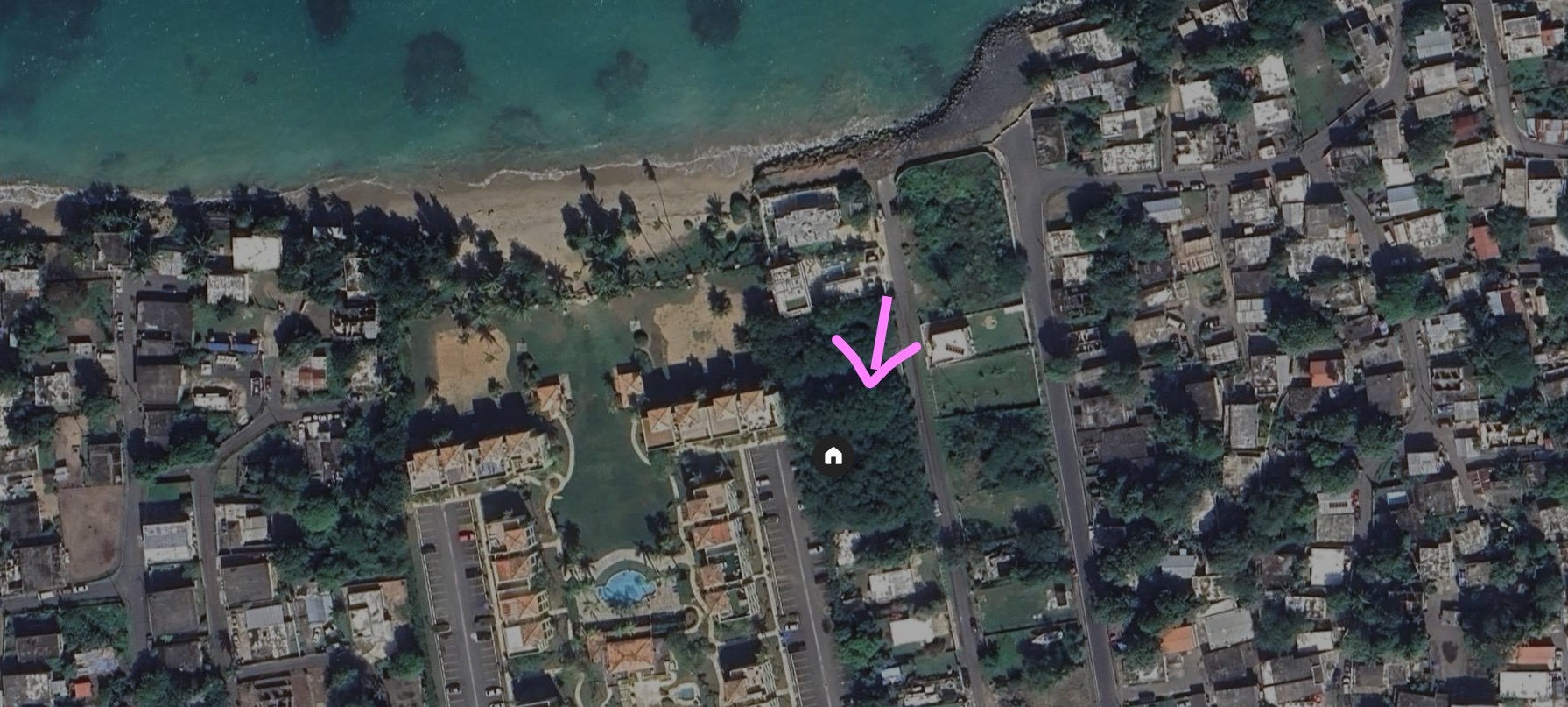
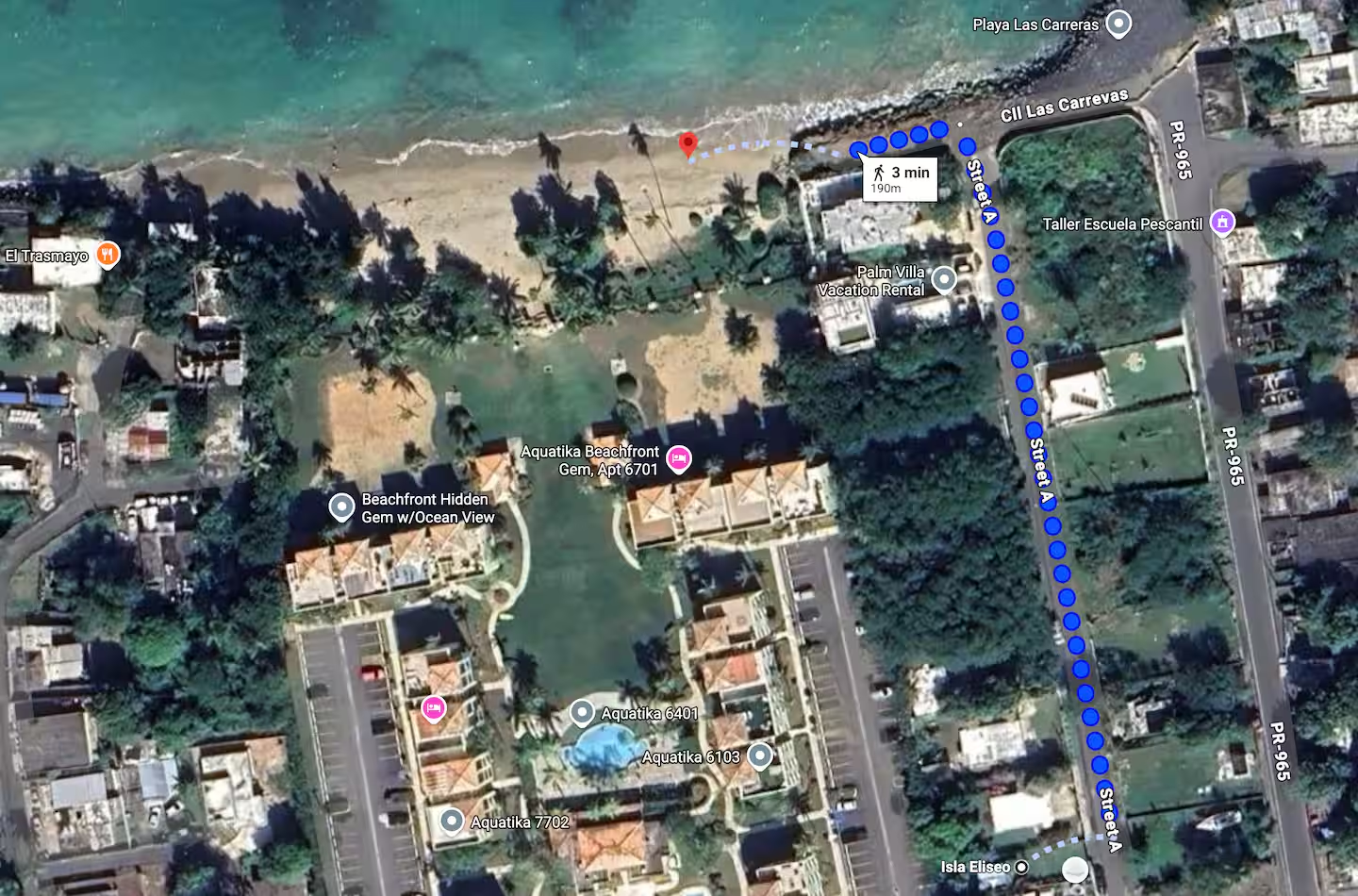
IMAGE: The 1.75-acre lot in Loíza, Puerto Rico, before any of the 4 units existed.
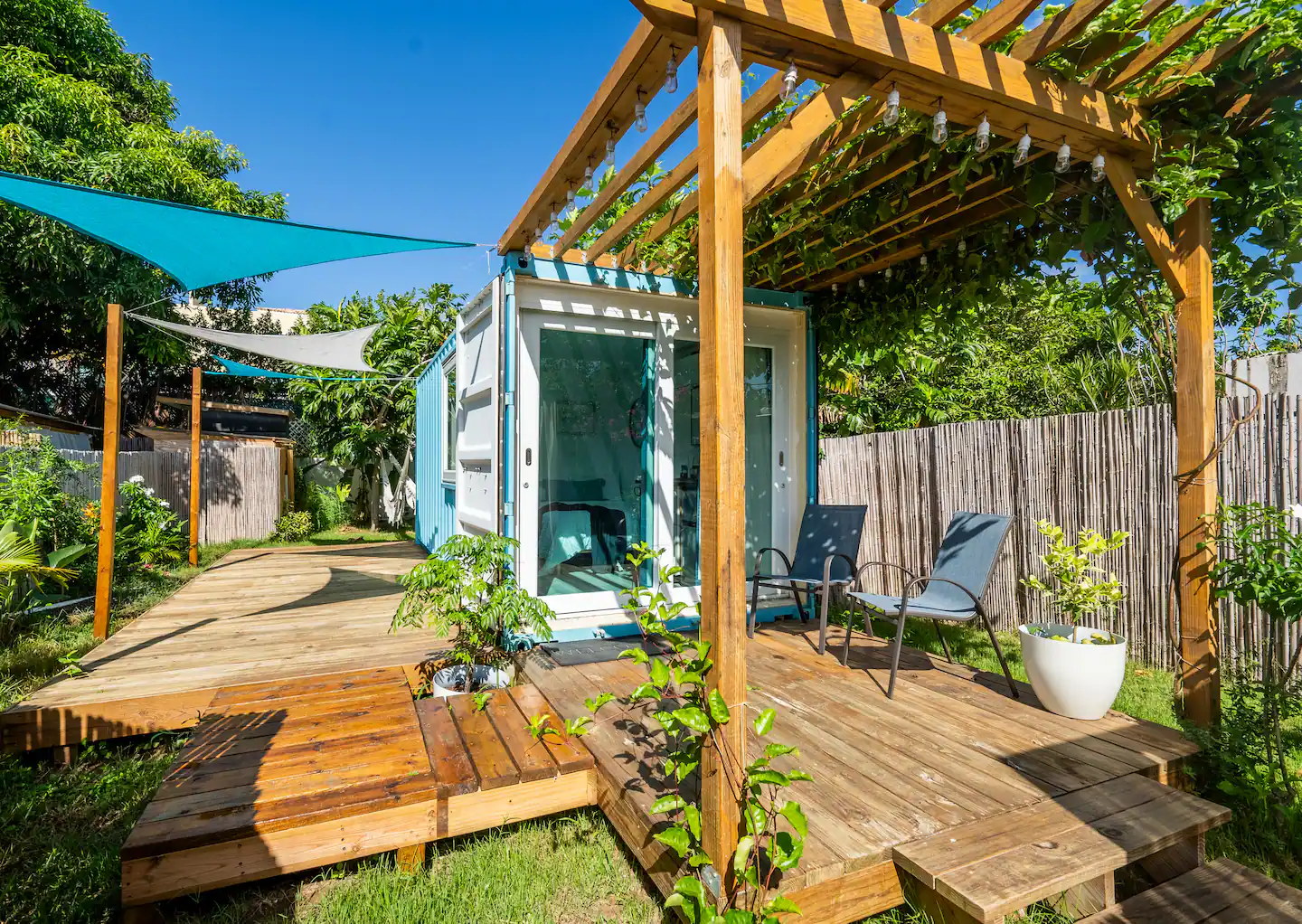
A 1.75-acre lot in Loíza cost $38,000, and a prefab container home from a local manufacturer added another $22,000. The manufacturer built the shell. Everything else, foundation, electrical, plumbing, septic, permitting, Sebastian took on himself to keep costs down.
Even the help he did pay for burned him. Crews he hired either didn't show up or did the work wrong the first time, and Puerto Rico's permitting process for a project this size amounted to sketching the layout by hand and hoping it got approved. It wasn't an easy start.
The container home cost $80,000 all-in, land included. Year 1 gross revenue landed at $20,000, climbing to $26,000, then $30,000, netting $20,000 to $23,000 a year in profit once cleaning and maintenance were factored in.
If you're weighing a prefab build against local permitting realities before you buy land, the Host Camp zoning guide walks through what to check first.
Opening Night
Sebastian flew back to LA a week before his first guest checked in, expecting the money to finally start rolling in. On opening night, Hurricane Fiona knocked out power across the entire island. The guest fled, and in the chaos afterward, Sebastian, thousands of miles away, couldn't even reach his cleaner.
The Carrying Cost
There's no mortgage payment in this story. Sebastian paid cash for the land and every build, so the usual monthly nut, mortgage, property tax, insurance, doesn't apply the way it does on a financed property. Low overhead was the plan from the start: Cash purchases, low-maintenance materials, and units simple enough to run without a property manager. The carrying cost here is the labor and the setbacks he absorbed himself instead of financing them away.
Three More Builds
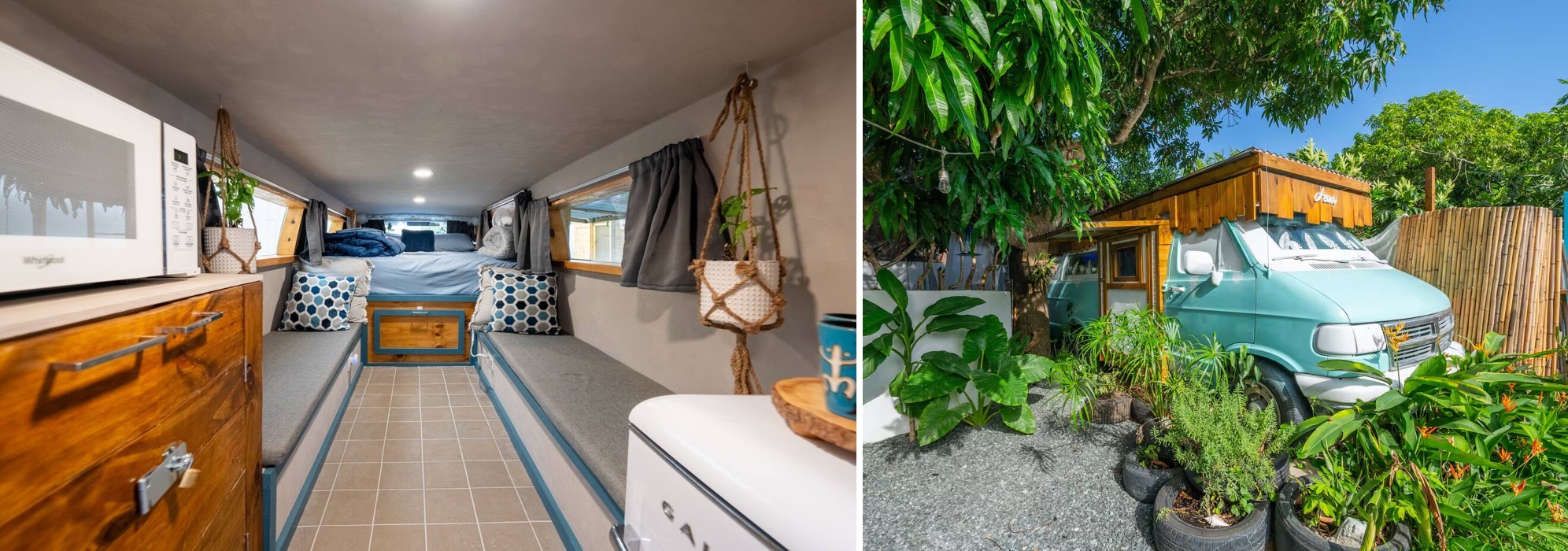
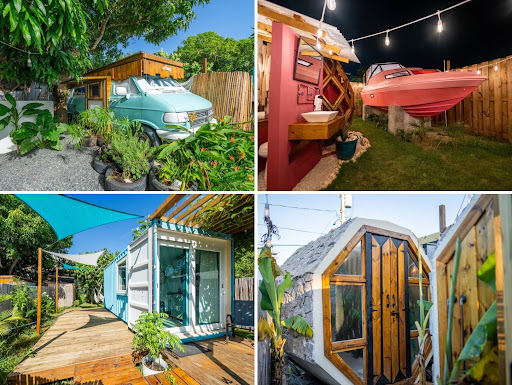
Sebastian didn't stop at one profitable unit. His first attempt at a van conversion, years earlier, using 1x6 boards, looked (in his own words) horrendous. He'd given up on it and used it for storage instead. He went back and finished it properly for about $20,000. It grossed $22,500 in its first full year, netting roughly $15,000.
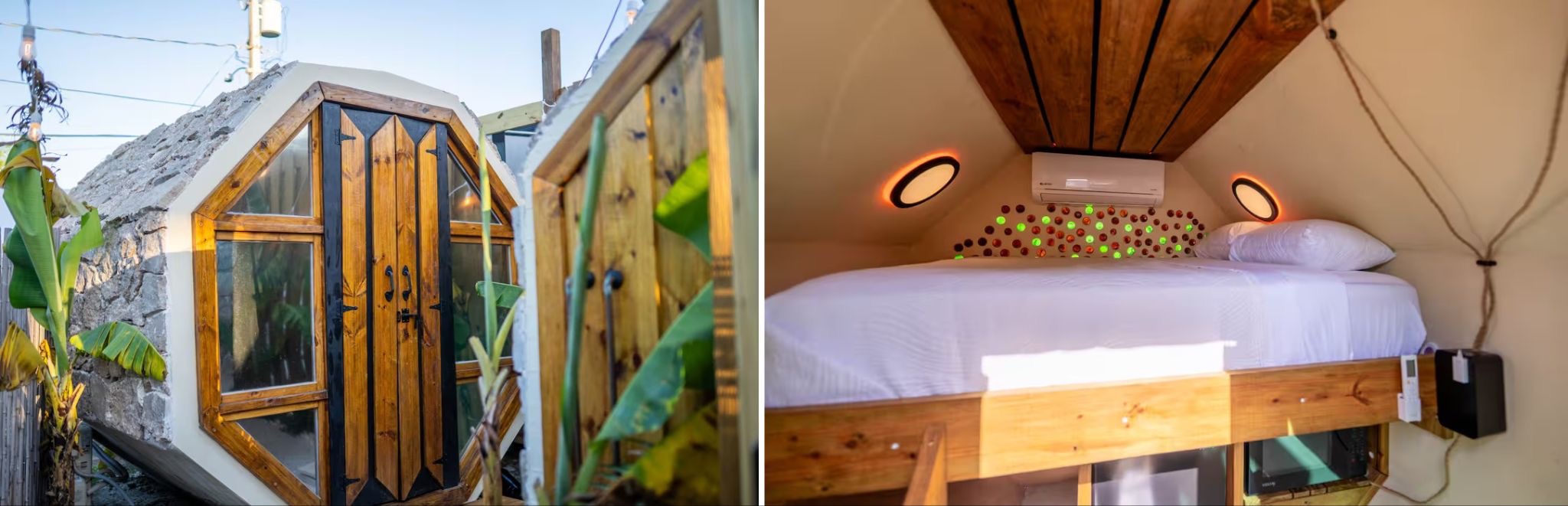
Next was a cement cave. A manufacturer quoted $15,000 to $25,000 for a prefab concrete tube. He built his own wooden mold to hold 9 metric yards of poured concrete instead, and the mold nearly failed mid-pour. It held. The finished unit cost $45,000 to $55,000, grossing $19,000 in its first 8 months and tracking toward $30,000 a year with roughly $20,000 in profit. For hosts weighing a similar DIY-versus-prefab decision, the prefab supplier breakdown covers what to look for before committing.
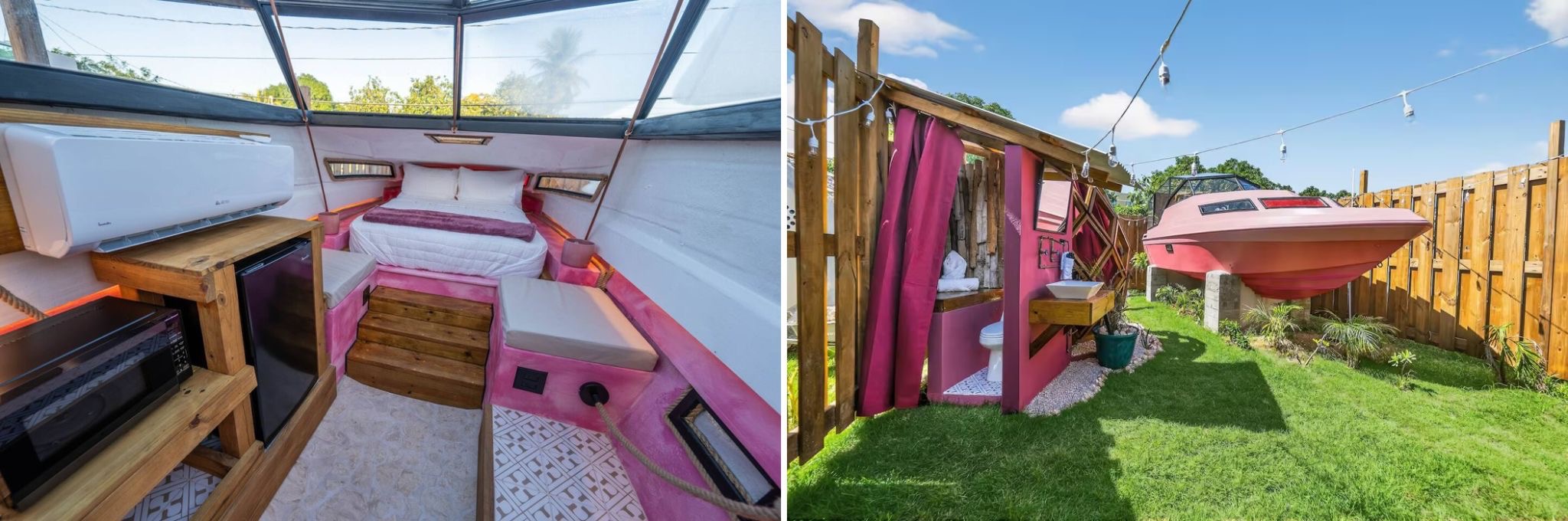
Then a boat. Sebastian negotiated what he thought was a few hundred dollars for a boat and trailer, and even with a last-minute price bump on the trailer, the whole purchase still came in under $2,000. The real cost showed up in the build. Boats don't have standard foundations, so he poured concrete underneath it and custom-built everything around the hull's curved shape, including a plexiglass dome, work that needed 5 times the material a standard build would. Total cost: $35,000 to $45,000. First month gross: $2,500. Projected first-year gross: $30,000 to $40,000, netting $18,000 to $25,000.
The Full Picture
- Total investment across 4 units: ~$200,000
- Container home build cost: $80,000 (land + unit + construction)
- Container home profit: $20,000-23,000/year
- Van build cost: ~$20,000
- Van profit: ~$15,000/year
- Cement cave build cost: $45,000-55,000
- Cement cave profit: ~$20,000/year (projected, based on 8-month pace)
- Boat build cost: $35,000-45,000
- Boat profit: $18,000-25,000/year (projected, based on month-1 pace)
- Combined projected gross revenue: $120,000/year
- Profit margin: 65-70%
- Projected net profit: $78,000-84,000/year
- Cash-on-cash return: ~39%
The Host Camp Take
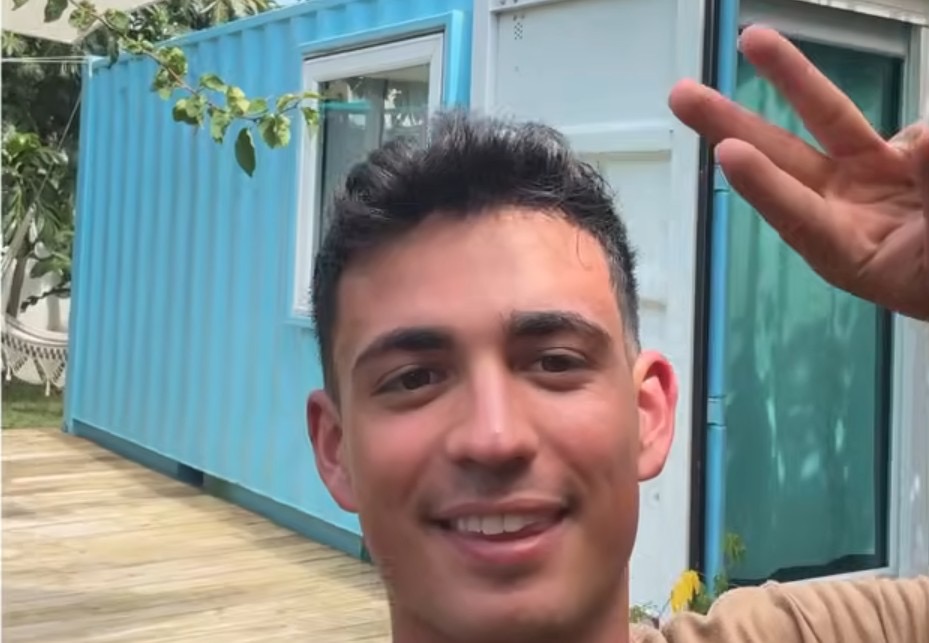
Sebastian built cheap, low-maintenance units on purpose, cheap enough to fund the next piece of land instead of the next renovation. Land acquisition was the goal from day 1. The units were the engine.
Bad crews, a hurricane, a concrete mold that nearly failed, a trailer that came in way pricier than expected, none of it stopped the build. Sebastian solved each problem on the ground and kept moving to the next lot. He's already bought new land. The next build is a lighthouse.
What To Steal
- Budget the full build, not just the shell. The manufacturer only ever handled the container's shell. The cement mold and the boat hull were entirely Sebastian's own builds and purchases. Every dollar after the starting piece, foundation, electrical, plumbing, permitting, and custom framing was priced separately, every time.
- Design for zero maintenance. Outdoor bathrooms instead of interior ones. Stone tile and rustic wood finishes that look better scuffed than new. Wear becomes part of the design instead of a repair job.
- Let the design set guest expectations. A rustic, unique listing builds a more forgiving guest base than a polished one, guests come in expecting character.
- Optimize for land, not nightly rate. Every unit was a means to fund the next acquisition, not the end goal itself.
- Expect everything to go wrong, and keep building anyway. Questionable crews, a hurricane on opening night, a concrete mold that nearly failed mid-pour, a pricier-than-expected trailer. Sebastian had it hard from day 1, but he never gave up.
Run your own numbers with our special Does It Pencil calculator→