

How to Buy Your First Rental Property in 2026: The Complete Framework

Real estate affordability is at one of its lowest points in 4 or 5 decades. Interest rates are higher than they were a few years ago. There's always a reason to wait. But 2026 has something previous years didn't: More motivated sellers than we've seen in years, properties sitting on the market long enough that a direct offer has real leverage.
Here's the framework for buying your first rental this year, without needing perfect timing or a spreadsheet-nerd brain.
Define the Role of Your First Deal

Every investor moves through 3 phases: Starter, builder, harvester. Your first deal belongs entirely to the starter phase. Its real job is teaching you the game, the knowledge compounds into deal 2, deal 3, and deal 4 far more than the cash flow from deal 1 ever will.
Think of your first deal as a base hit. The home run comes later, after you've learned the game. If your first rental makes $200 to $1,000 a month, that's a win, and most of that money should get reinvested anyway.
Cash flow versus appreciation is a spectrum, and where you sit on it shifts as you gain experience and capital. Early on, cash flow matters most because it protects you from losing money. Over time, appreciation and debt paydown start doing more of the real wealth-building. A property bought for $300,000 growing 3-4% a year turns into $400,000-$600,000 over a decade, and that's on top of whatever the rent itself grows into.
Choosing Your Strategy: Long-Term, Short-Term, or House Hacking

Long-term rentals are the boring, passive option. A 12-month lease, a good tenant, a property manager charging 8-10% of rent, and you're down to a couple hours a week of involvement. Less cash flow than a short-term rental, but far fewer moving parts.
Short-term rentals run 3 to 5x the revenue of a comparable long-term rental. They function like an active business, with full furnishing, more guest turnover, more maintenance, and more of your time. If a long-term rental makes $1,000 a month, a mid-term (30-day) rental might make $2,000-$3,000, and a short-term rental might make $3,000-$5,000.

House hacking means living in part of what you rent out, a duplex unit, a spare room, an ADU in the backyard. It's the cheapest entry point by far, because owner-occupant financing (FHA at 3.5% down, conventional at 5%) only exists if you live there. This is also the closest thing to buying your first rental property with no money down, since 3.5% on a modest property can mean an out-of-pocket cost in the low five figures. Our guide on breaking into short-term rentals without a million bucks covers this and a few other low-capital paths in more depth.
Match your strategy to 3 things: How much time you have, how much income you want the deal to produce, and how much risk (and privacy) you're willing to trade for a lower down payment.
The FHA Repeat Problem
House hacking works well for a first deal, but FHA loans generally allow only one at a time. Job relocation 100+ miles away, a documented increase in family size, or having 25%+ equity plus a signed lease on the first property are the main exceptions. Outside of those, repeating the house-hack strategy on your next property usually means refinancing your first FHA loan into a conventional loan first, or using conventional financing (5% down) on the next purchase instead. Worth confirming your specific path with a lender before you assume you can just do this again next year.
How Much Money You Need

The 20-25% down payment myth only applies to a standard investor loan. Real options:
- FHA (owner-occupant only): 3.5% down, requires living in the property, comes with mortgage insurance
- Conventional (owner-occupant): 5% down, similar mortgage insurance requirement, removable once you hit 20% equity
- Second home / vacation loan: 10% down, requires personal use of the property for roughly 2 weeks a year
- DSCR (investor) loans: 15-25% down, qualifies off the property's income rather than your personal income, ideal if you're self-employed or already own several properties
- Seller financing: Negotiated directly with the seller, terms vary, harder to find but real
On a $400,000 property, that's the difference between $100,000 out of pocket (conventional investor loan) and $30,000-$40,000 (house hack at 5% down, or $14,000 at FHA's 3.5%).
Reserves matter just as much as the down payment. Start with a $5,000 minimum emergency fund, then build toward 3-6 months of total property expenses (mortgage, taxes, insurance, maintenance) in a separate account. Budget 10-20% of rent toward capital expenses and maintenance combined, older properties need more, new construction needs less.
Underwriting Without Becoming a Spreadsheet Goblin

You don't need to be a numbers person to run real numbers. A few formulas do most of the work:
- The 1% rule (long-term rentals): Monthly rent should be roughly 1% of the property's total cost. A $1,500/month rental should cost around $150,000 or less. Harder to hit in 2026's affordability environment, but still the fastest gut check.
- Net operating income (NOI): Gross rent minus every expense except the mortgage. This is the single most important number in the deal.
- Unleveraged yield / cap rate: NOI divided by total cost. Look for 5-7% in a strong location, higher in a rougher one.
- Cash-on-cash return: Annual profit divided by total cash invested. In 2026's rate environment, 10-15% is a reasonable target for long-term rentals; short-term rentals can run higher but the old 20%+ standard from the low-rate years isn't the baseline anymore.
Real estate has 4 ways it pays you: Cash flow, appreciation, debt paydown, and tax benefits. A single deal rarely maxes out all 4. Know which ones matter most to you before you start running numbers.
Mistakes That Kill First Deals
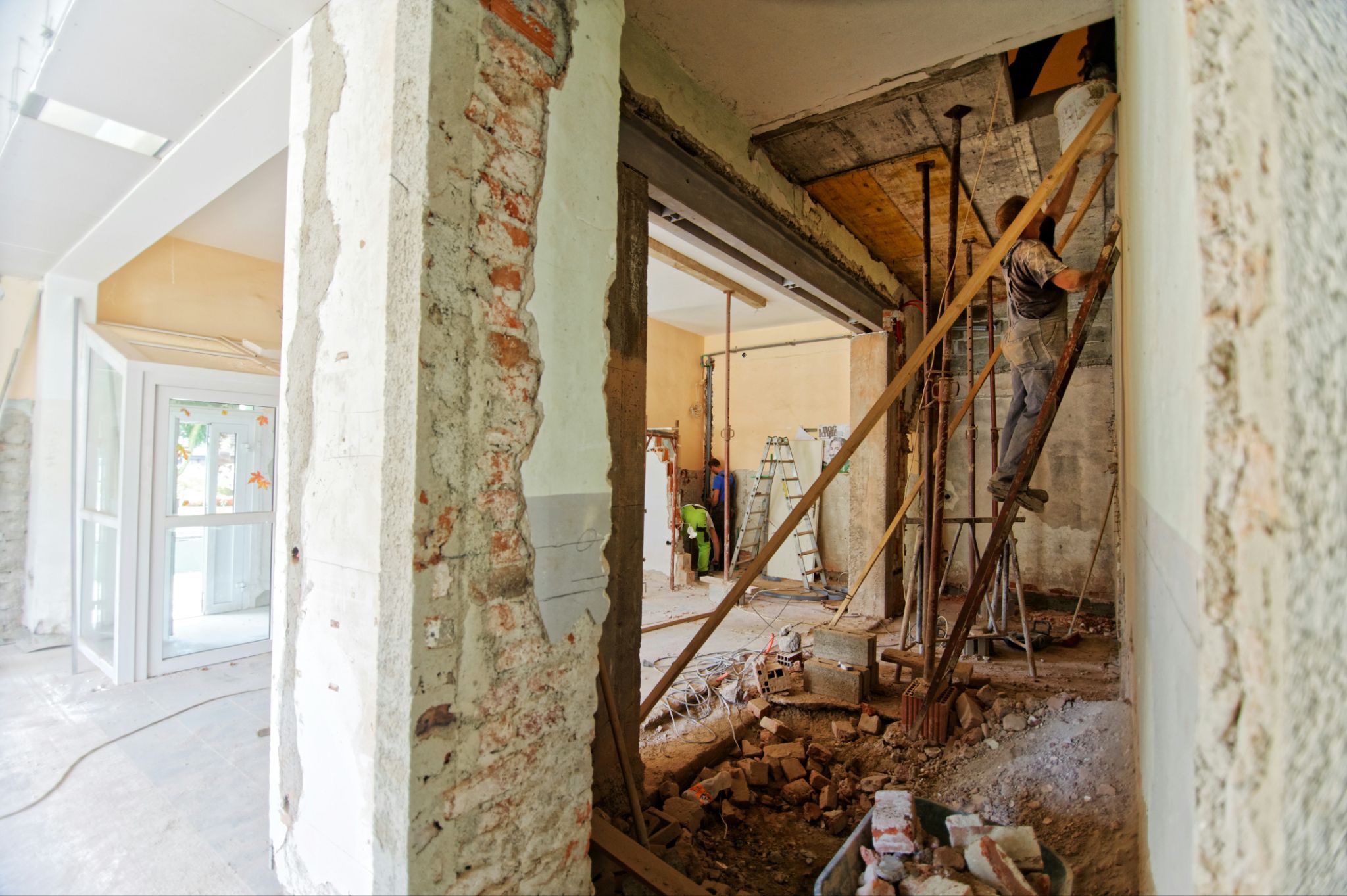
- Taking on a strategy too advanced for a first deal. BRRRR and flips carry real remodel risk, a $40,000 loss on deal 1 is often enough to end someone's real estate career before it starts.
- Skipping reserves for capital expenses. A roof, an HVAC system, a water heater, these don't ask if you budgeted for them.
- Over-renovating. Spend on what shows up in the listing photos and drives bookings. Personal taste comes second.
- Cutting the down payment too thin. A property with barely positive cash flow has zero room for a slow month or a surprise repair. Bring more money to a safer deal rather than less money to a risky one.
Financing Recap
FHA and conventional both work well for owner-occupants. Second home loans open the door to short-term rentals at 10% down. DSCR loans are the standard path for self-employed investors or anyone past their first few conventional loans. Seller financing exists, but it takes direct negotiation and isn't always easy to find.
What Success Looks Like

Staying in the game for 10-20 years is what makes real estate work. Investors who quit usually do it for emotional reasons, a scary tenant situation, a financing scare, a slow market. The math rarely stops working. Get your first deal done, take a breath, write down what you learned, and let that inform deal 2.
Consistency beats perfection. The investors who get good at spotting a real deal are the ones who've looked at hundreds of properties. Feeling fully ready never comes first.
Book a free strategy call with the Host Camp team →


